
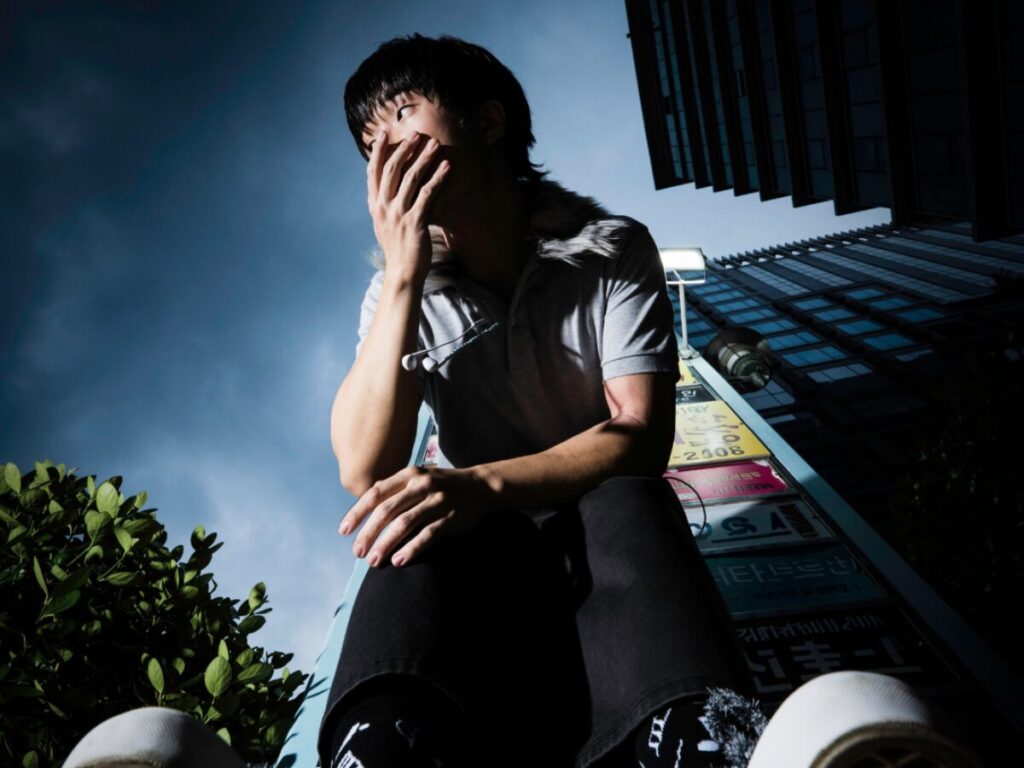
For this conversation, Sion reflects on why eigensinn had to happen now—what burnout revealed, how electronic music and hyperpop became the most honest place to rebuild from, and why “organic” is still a non-negotiable, even in the loudest, roughest textures. From nighttime cliffs to Porter Robinson’s foley-driven warmth, from Tokyo’s harmony to Koji Kondo’s craft, Sion maps the record through the moments that made it click.
First, for people meeting you for the first time — how would you describe “Sion” in one short phrase?
Sion: Sion is a constantly evolving artist.
This shift in sound feels very intentional. Why did you choose this musical direction now — and what changed most clearly from your previous work?

Sion: I had a pretty big burnout. I felt that my past work didn’t really represent me as an artist anymore. It was more like a result of influences where I didn’t have the overhand. It was uncontrolled.
So I felt the need to find something I love and resonate with. And that was electronic music and hyperpop. Listening to the Japanese electronic music scene, I fell in love with the way they tweak pop music to their taste and make interesting textures. That was the first time I wanted to do a certain genre or style. So I just went with it — purely instinctive.
This album is the same. It’s instinctive, quirky and fun, while keeping the melodic strengths of my past work.
When you imagine this record playing in real life, what kind of scene do you see — morning or night, and where?
Sion: I feel like this album is best suited to a nighttime setting on a mountain — maybe even on a cliff. The weird mixture of emotional moments and danceable moments suits that setting the best.
No matter how the genre shifts, there are usually a few things that never move. If you had to name three words for your core, what would they be? And is there a track where that core is most obvious?
Sion: Detail, hybrid, organic.
I began as a classical musician, so I grew up constantly analyzing details in music — and that reflects on my music. Even if hyperpop is a really rough genre, I can’t escape this detail-oriented mindset, and I don’t mind it honestly.
Since I’ve done R&B, hip-hop, ballads, classical music, jazz — so many different genres throughout my career — I feel like it’s now in my blood to mix and mash up different genres. Hybridize music.
And when I listen to music, I never use noise cancellation. I like to listen to music breathing with the ambience around me. Music to me is organic, and I always like to have some organic factor in my music.
The track that displays all three aspects the best is “homes.” It’s a hybrid of pop, rock, folk, hyperpop, has organic textures throughout, and I spent weeks tweaking details nobody would notice.
If a first-time listener could hear only one song to understand who you are right now, which track would you choose — and what’s one defining moment in it?
Sion: That would be “avoid2.” I produced that song in one week. It was a really different experience compared to my past work. I didn’t overthink — I tried to utilize every little idea that came to mind.
It starts with an ambient intro, goes into an EDM build-up, switches to a rage drop, then a hardstyle–phonk hybrid drop, and lastly builds into a riddim drop. It’s like a rollercoaster.
I feel like the way the rage part and the phonk part don’t have a build-up or breakdown in between shows how stupidly instinctive this song is (1:40). I feel like that’s me right now: versatility, fun, electronic music.
Were there any references — a track or artist — that directly shaped how you approached this project? What did you borrow from them?
Sion: I got influenced by a lot of different artists. Porter Robinson’s album Nurture is still a go-to handbook for me to learn how to utilize textures and foley to make a track feel more organic and lively.
peterparker69 also inspired me to mess around with my vocals — pitch shifting and bending the stereo image. So many more.
You spend time in Tokyo — what part of the culture sticks with you the most?
Sion: I really love the balance between self-expression and cultural preservation in Tokyo. It’s fascinating to see people with different perspectives respect each other’s point of view. More expressive people acknowledge older values and cultures, while most people also appreciate the art of expressing themselves.
I feel like that is lacking in a lot of parts of the world. Harmony.
Any Japanese artist you’re especially paying attention to right now — with one concrete moment that stayed with you?
Sion: I was at the year-end party of WWW last year where lilbesh ramko performed. I was already a big fan, but the energy and his delivery on stage blew me away.
How he made remixes of his own songs to surprise the crowd, how he moves to his music — everything inspired me and the way I perform nowadays.
If you could spend one day with a Tokyo creator — who would it be, and what would you want to make together?
Sion: I would love to spend a day with Koji Kondo. I’m a big fan of game music and I would love to work as a game music composer someday as well.
So I’d love to see how he works on his pieces and learn from him.
For listeners stepping into eigensinn for the first time: two gateway tracks, then one deep-dive track. And for each, a favorite one-second moment with a timestamp.
Sion: Gateway tracks would be “holdon” and “homes.” Both have a very clear pop structure, so it’s much easier to digest than other songs on the EP.
“holdon” is a banger with electropop elements, so I feel like people who like EDM and pop will resonate with it. I especially like the complextro drop at the end (1:45).
“homes” is more of a rock-pop tune and I feel like it’s the most accessible tune on the record. I like the second verse because it reminds me of old pop-rock songs from the 2000s (1:51).
A deep-dive track would be “avoid2.” It has no real structure — I just focused on making each part stronger than the other, trying to stimulate my dopamine receptors. It might be difficult to digest on the first listen, but if you appreciate hybrid music and sound design you will love this one.
My favorite moment is the last riddim drop because it has a really weird groove (2:41).
Is there something the visuals communicate that the music alone can’t? A jacket, photo, or shot that carries an extra feeling.
Sion: I did a live performance video inside of a little van — I played on my DJ controller and sang with a bunch of autotune on my voice.
This experience of fun and improvised moments elevates the chaotic manner of the album much stronger than just listening to the album on its own.
Your fashion mood right now — colors, silhouettes, textures. Has it changed with your stage life or artwork?
Sion: A few years ago I used to be really into fashion — matching interesting pieces and digging through vintage archives. Nowadays it’s almost completely the opposite.
I usually like to wear stuff that I feel comfortable in, stuff that doesn’t interfere with my motions when I’m performing or working. My style has gotten a lot more cozy and chill.
Still, I tend to pick pieces that have some sort of fun factor while being comfortable.
Lastly: what’s your current favorite piece of clothing, and why?
Sion: I’m wearing a lot of hooded zip-ups. Easy to wear — and since I got a lot of social anxiety, wearing something hooded makes me feel a bit more comfortable.
My favorite zip-up right now is from a Japanese brand called GB Mouth.