
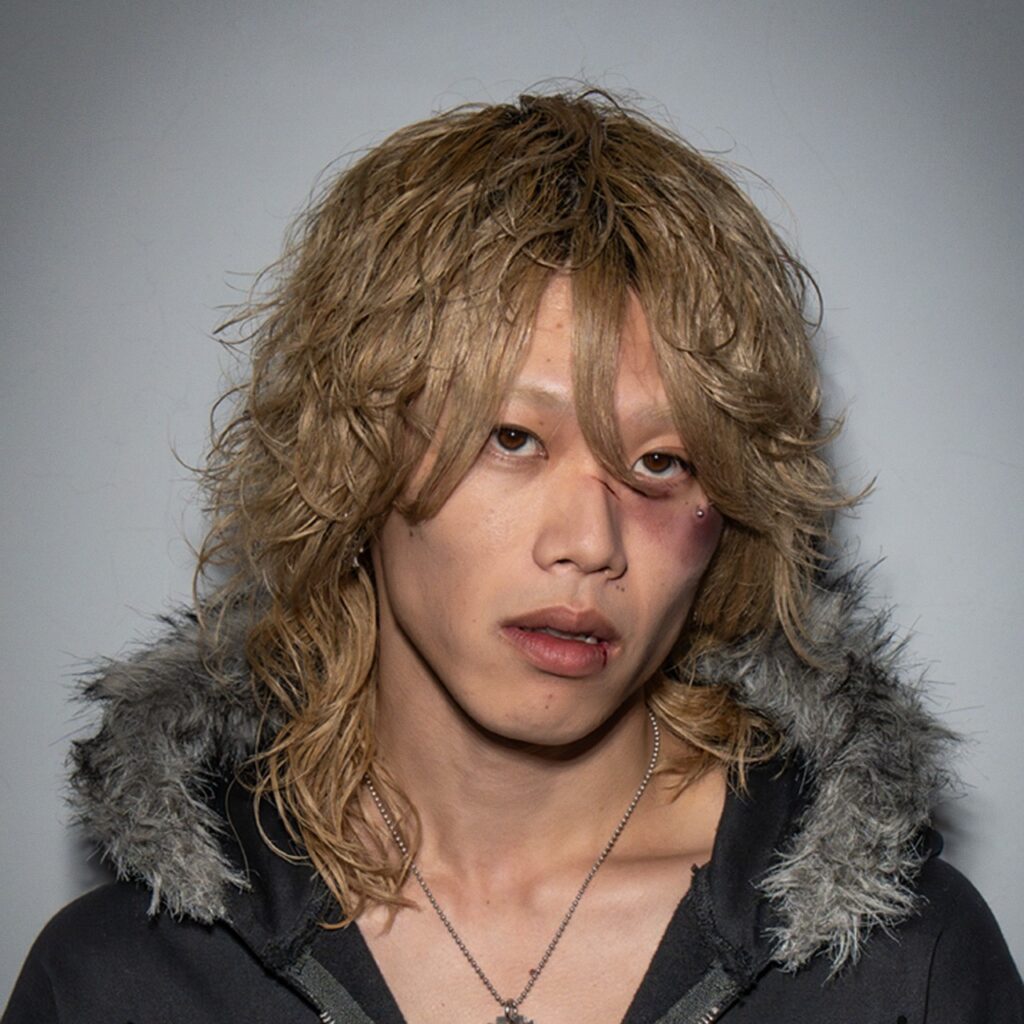
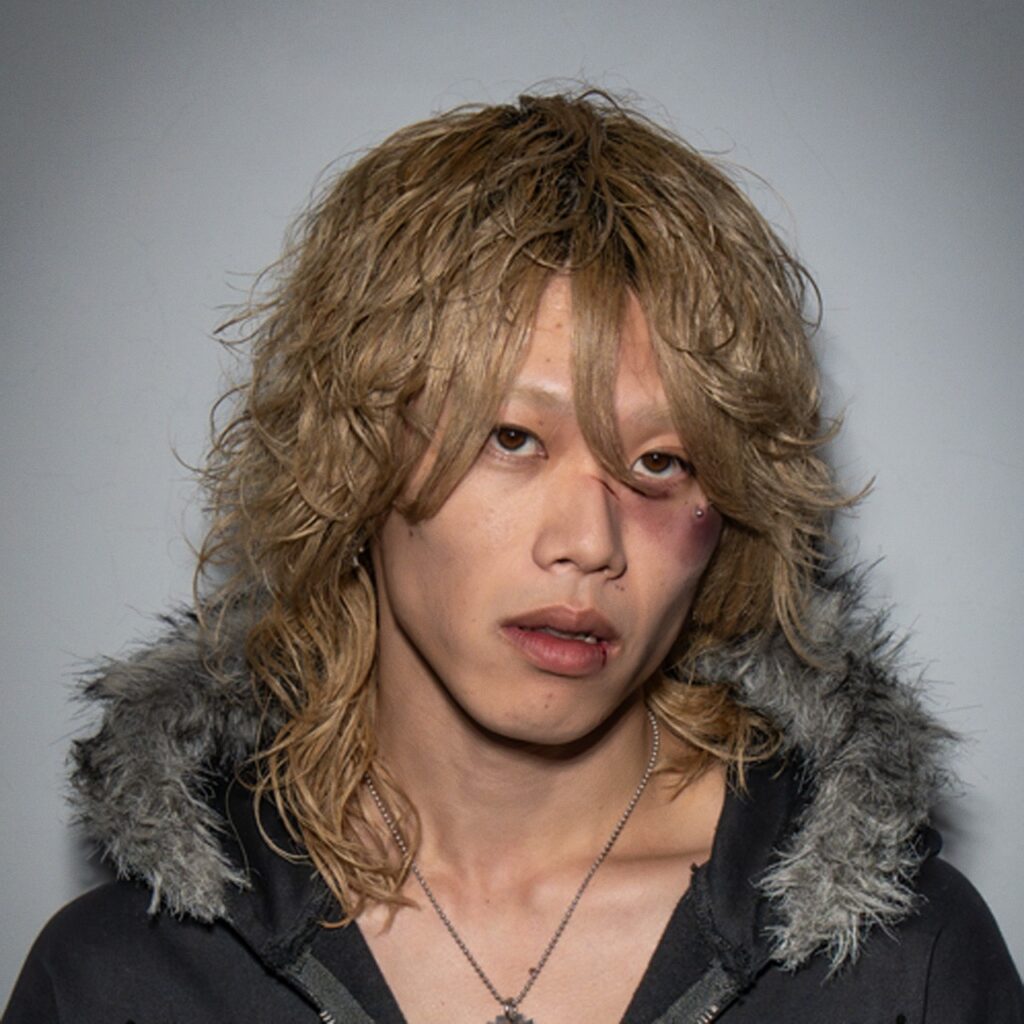
who28 is an artist who continues to emit a unique energy, effortlessly jumping over the boundaries of genres like trap, rock, and hyperpop. Since starting his career in 2017, he has blended street vibes with introspective lyrics. The title he gave his latest EP is “TAIGA”—his own real name.
Between the “ideal self” of who28 and the “immature self” of TAIGA, he navigates a complex internal conflict. We sat down with him to discuss his musical roots and the passion that drives him forward.
— First, please introduce yourself.
who28: I’m who28.
— What is the origin of the name “who28”?
who28: It was the day Lil Peep passed away (November 2017) that I decided to really start making music.
At the time, I was debating whether to use my real name or create a stage name. I had these numbers that felt like “angel numbers” to me. My birthday is February 8th, and there was a time when I kept seeing the numbers “2:08” everywhere in town. That made me want to include “28.”
— Was it inspired by someone you looked up to?
who28: No. I don’t admire anyone in that way, and there’s no one I’m chasing. I feel like the work comes first and the name follows later, so I thought the name could be anything.
But since my birthday is Feb 8th and I kept seeing “2:08,” “2,” and “8” everywhere, I wanted to incorporate “28” like an angel number.
So, I added “28” to “who” and became who28. It’s similar to naming a character in a video game.
It carries the feeling of: “I’m nobody, and I won’t become anybody, but I am me.”
— Was that a reflection of the vibe of the era?
who28: Definitely. Back then, with XXXTentacion’s generation, there was this trend where names that were hard to read were considered cool. There was a bit of a desire to make the name “unreadable.” I kind or regret it now, though (laughs).
— If you were to rename yourself now?
who28: Honestly, nothing comes to mind immediately (laughs). But I think a name that sticks instantly, like “Fujitaito,” would have been better.
— Tell us about your musical roots. Is there a strong influence from a specific person in the music you make now?
who28: Not in a heavy sense. But I love “songs with a soul.”
— What kind of music did you grow up listening to?
who28: I liked David Bowie, and I really loved Radiohead.
— What triggered your move into rap?
who28: When I first discovered Trap, I felt it was freer than rock—like anything goes.
— Any other sounds that influenced you?
who28: I’ve liked Perfume for a long time. Lil Wayne and T-Pain were also huge. When I first heard the sound of “Auto-Tune,” I realized, “This is what I’ve always liked.”
— What was your entry point into Hip-Hop?
who28: Wu-Tang Clan. It started when I bought one of their hats and looked them up. I was blown away by the hook of “Cash Rules Everything Around Me (C.R.E.A.M.).” I got into it through fashion.
— Do you listen to Japanese music?
who28: Yes. In Japan, I like soulful things like Yutaka Ozaki. I don’t really like music where I can’t hear the soul. But I like m-flo, and I listen to Mr. Children too.
— What is the “heat” you want to put into your songs?
who28: Including live performances, I think music is meaningless if it can’t give energy to the listener. First, I want to properly create and release songs that allow me to put out energy.
— Tell us about your latest EP. What thoughts did you put into the title “TAIGA”?
who28: “TAIGA” is my real name. While there’s the “who28” side—the person I want to be or the version of myself I like—there’s also a “lame” side, an immaturity I don’t want to expose. I felt the texture of that immaturity was very “TAIGA.”
Originally, I was going to release an album titled “who28,” but when the songs came together, a switch flipped: “I should release this as TAIGA first.” I want to release the next album as “who28.”
— Where in the songs did you find “TAIGA”?
who28: In the first track, “Fuck Love.” I started making it using Trippie Redd and XXXTentacion’s “Fuck Love” as a reference point, using phrases like “Baby, I need you in my life.” Beyond that, I’m clashing with the feeling of “wanting to be together” versus “needing to focus on myself alone right now.” That conflict felt like my current immaturity.
Also, lately, I feel like I’m “peeling back my skin” (becoming raw). I prefer songs that capture that current feeling of mine over songs that look like a perfectly groomed face.
— Are the later tracks on the same line?
who28: The last track, “miss you,” is almost like just singing my daily life as it is. That felt like my true self—TAIGA—rather than the bravado of who28.
But I don’t want to completely separate who28 and TAIGA into two different personas. In the end, they are one.
— Conversely, what state of mind is “who28-like” for you?
who28: Simply put, it’s the state where I can like myself. When I’m close to my ideal self.
I still rewatch XXXTentacion’s Instagram Lives from before he passed, and different words resonate with me at different times. This time, words like “Become who you want to be” hit me hard.
— Do you have an ideal image?
who28: It might sound shallow, but I just want to be having fun making music.
Also, I believe a little bit in reincarnation. If my future self in the next life finds an artist named who28 and thinks “this is cool,” that might be my life goal. That’s why I want to make and release as many good songs as possible before I die. I want it to spread widely enough to reach my next life.
— Can you speak more specifically about the influence you received from XXXTentacion?
who28: I started liking Juice WRLD after he passed, but I was really listening to Lil Peep and XXXTentacion while they were still alive.
If I talk about influence, it’s the sense that “you have to grow as a human for your songs to get better.” I think XXXTentacion was in the middle of trying to change himself. So, I want to grow properly every day.
— What is Hip-Hop to you?
who28: I don’t “worship” hip-hop as a genre. When I make my own songs, I don’t draw lines like “this is rock” or “this is hip-hop.” Whatever I think is “cool” is what hip-hop is to me.
— Then why do you call yourself a “rapper”?
who28: Because I didn’t start with composing; I started by learning about freestyle and entering battles. No matter how far I go, my core is closer to being a rapper.
From the perspective of people in other scenes, I’m clearly seen as a rapper. Conversely, when I go to the rap scene, people say I’m “hyperpop-ish.” But I have a strong sense of doing this as a rapper.
In Tokyo, there’s an atmosphere where people acknowledge each other across genres if they think something is cool. On the other hand, in Osaka, it felt like things were more strictly divided. When I performed in Osaka, someone told me, “We don’t do this alternative stuff,” but I’m doing it because I think it’s hip-hop.
— Who do you want to reach with your music?
who28: I want it to reach everyone. Among them, I especially want it to resonate with people who are fighting themselves.
I feel like there are many people who just do what they’re told and go through life without thinking deeply. Since we only get one shot, I think people should get more passionate about their lives.
I don’t like the atmosphere where “being cool/indifferent” is seen as the right way to be. Many people put on a front and only say cool things, but I think, “There’s no way that’s the whole story.”
— Finally, a message for those listening to your work.
who28: If this music is playing at a moment in your life when you want to take a step forward, I want it to be a work that helps us move a little together.
Don’t be too tense; just play it somewhere in your daily life. I’d be happy if it helps when you need courage or a push in the back.
I can continue music because there are people who listen. Thank you, always.
His career, which began by calling himself “Nobody” (who), has now arrived at a point of sincerity where he carries his “Real Name.” The heat that who28 emits will continue to change shape, but it will surely continue to quietly yet powerfully push his future self—and all of us living in the now—forward.