
Songs born naturally through the accumulation of time. Behind them lies not only everyday life, but urban landscapes, experiences abroad, and a connection to club culture. $till.J.Cark speaks on where he stands today — unpacked through concrete episodes.
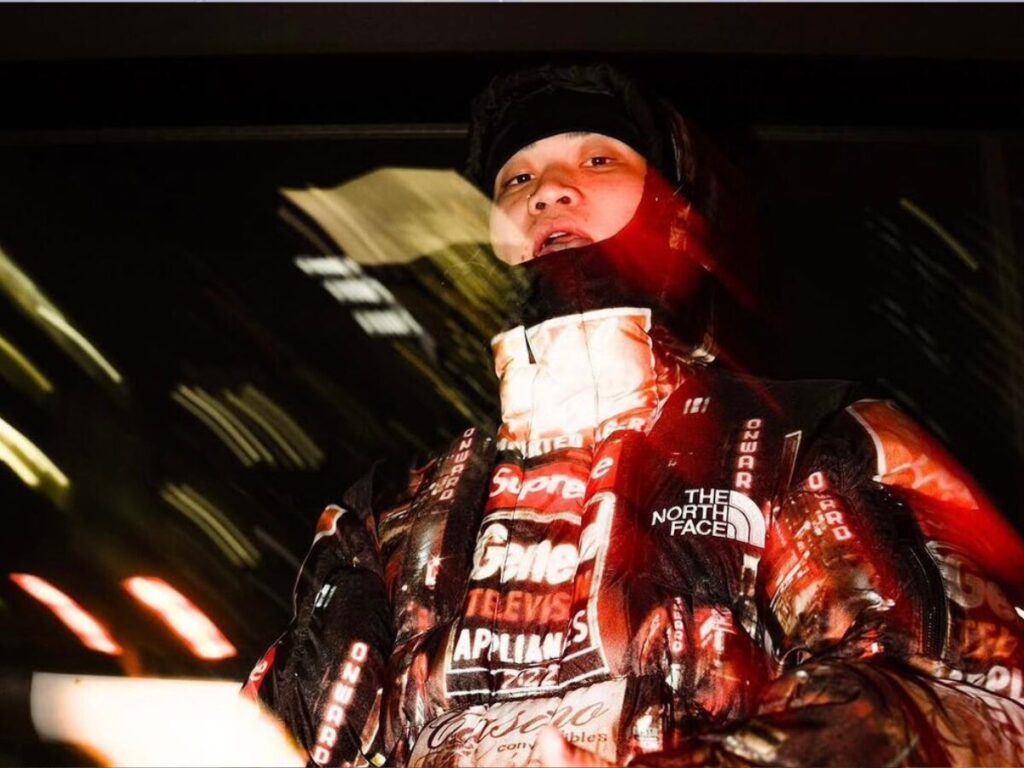
――How did your musical identity come together?
$till.J.Cark: I started music pretty late — I was 21. Around 2018. Back then I went by “Kaki” and was rapping in my hometown Nagano.
It was Boom Bap at the time. Some of it had Lo-fi elements mixed in, which might actually be similar to what I do now. There was harder stuff and more melodic stuff — a bit of everything.
From the recent EP, the second verse of “few minutes” is probably my favorite.
RAPSTAR — I submitted for it, got rejected, and this track was me working through that.
The approaches on verse one and verse two are completely different, and I can feel the growth in that.
Six months ago I was like “why didn’t I make it with this?” — but looking back now, “yeah, that wasn’t going to make it.” What I’m making now is on another level.
Lately, “making it” alone isn’t the goal anymore. It’s more like — make it, then what, then what after that. I grew up poor, so I want to reduce the number of people who are poor.
People who can put in the work should be able to rise — but I want the environment where that’s possible to be equal.
Things like free studio access — that’s the kind of thing that outlives me. That’s what I think about every day.
――Does Tokyo as a place have an influence on you?
$till.J.Cark: Definitely. Early morning Tokyo, for instance — fewer people, softer light, it shows a completely different face.
Then at night there’s an entirely different energy. I feel like those two extremes come through directly in the structure of the music.
――Can you tell us about your experiences abroad?
$till.J.Cark: Going to America had a huge impact. The backstory is — after graduating university, I joined a startup-ish architecture firm as a new grad and did renovation sales for about a year and a half.
I was in a suit every day, 13-hour shifts were normal. It wasn’t fun at all — I was pretty disillusioned. But I’d go out on days off and managed to get by that way.
Then one day I happened to get off around on time, didn’t feel like going straight home, so I dropped by a vintage store friend’s place — and there was someone there who’d just come back from Los Angeles.
That person was someone called Kenbou-san — the manager of a sushi restaurant in Los Angeles.
I’d always vaguely wanted to go abroad, had this rough idea of making it to America by 30, so I was listening and said “I really want to go to America.” He told me they’d cut staff during COVID but now that it was over they needed people again — and just like that, right there, asked if I wanted to work.
But of course I hesitated. I was a salaryman.
“Even if I go, I have no money.” I literally had zero savings.
Then my friend said he’d let me live at his place. And that he wouldn’t charge rent.
A place to work and a place to live — sorted.
But I needed tuition money for a student visa. Which I didn’t have.
Then the vintage store friend said he’d lend it to me interest-free. And on top of that, I needed proof of balance — 3 million yen in my account — and the landlord there (a real estate guy, an alumnus of the company I worked for) said he’d put up the 3 million.
Everything lined up.
“You just hit the jackpot. Decide tonight whether you’re going or not. If you don’t go now, you never will.” So he told me.
That same night I called my best friend and said “I’m going to LA. If I chicken out, call me on it.” Made my commitment, said “I’m counting on you.” Next day I went to city hall and got my passport. (laughs)
From there it was about six months of quitting my job and everything else, and I actually got to Los Angeles in 2021.
After experiencing America, something cracked open in me — I became able to say I like what I like, and say I dislike what I dislike.
Going abroad is genuinely massive.
That said, I can’t find it cool when people hate on Japan — “America is like this, Japan is so behind” — that kind of thing. It’s negative, and I just don’t want to hear it.
I knew I didn’t want to be that person. Being based in Japan while getting out abroad when I can — that felt like the right answer to me.
――Any thoughts on the current Japanese scene?
$till.J.Cark: There’s a very family-like feel to it. People say they want to hook up the ones who are killing it — but my impression is that “people who are close to someone who’s killing it” tend to get more recognition.
Just going hard on rap alone seems tough. You need off-music power — going out for drinks, building connections — way too much of it.
I think various media outlets ultimately pick based on skill, but in practice, people who are connected can end up getting the spot, and looks matter too.
But I want to go straight down the middle. I want to make it with rap.
――What did you take away from appearing on SHOW ME THE MONEY 12?
$till.J.Cark: Korean rappers are skilled across the board — even with large numbers, the level was high. At the same time, as technically strong as they are, there were moments where it felt like “just being good,” and I got the impression that the influence of idol culture has made sonic perfection the priority.
In contrast, Japanese rappers are characterized by their personality and life-grounded lyrics — I think there’s a rawness there that’s genuinely appealing.
――Tell us about your approach to making music.
$till.J.Cark: I don’t really box myself into genres. It’s more about incorporating whatever I’m into at the time.
There’s influence from club music, things I feel in everyday life — it all blends together, and that feels natural to me.
――Is there change you’re aware of in yourself?
$till.J.Cark: I used to have a much stronger sense of “I have to do it this way.” Now I let things flow a bit more naturally.
I think a big part of it is that I’ve found my own sense of conviction about living through music.
――Tell us about GOOD MORNING TOKYO, the event you organize.
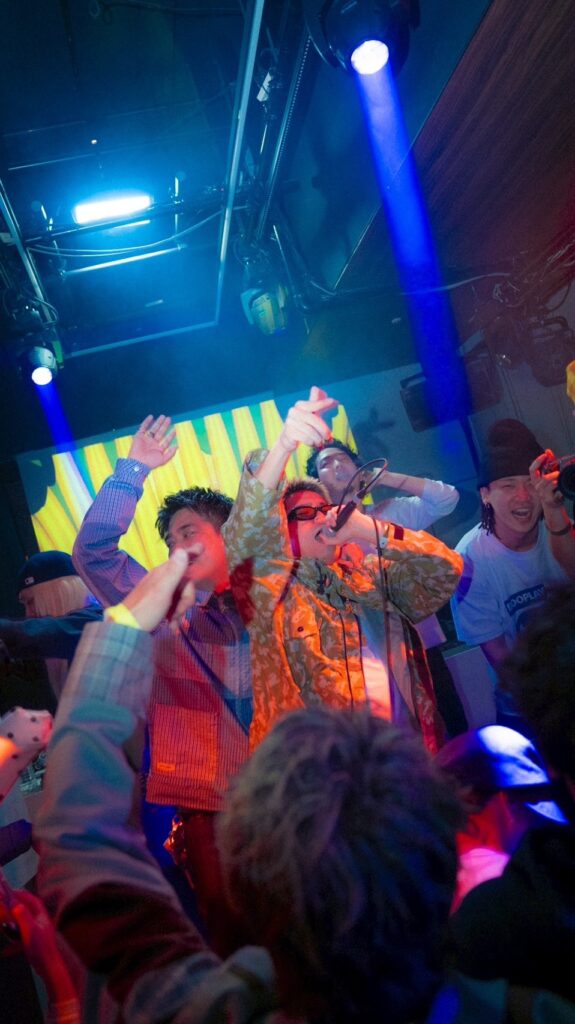
$till.J.Cark: We started with three people, and now it’s me, RAFBOY, and four people including Roy’s club. RAFBOY is really the brain behind it. I met him through a mutual friend before I went to America — at first it was just light conversation.
The most important policy for the party is “shedding your title.” Tokyo has become a place where even social gatherings feel like networking opportunities, and I feel like there are fewer spaces where you can just genuinely have fun. There was a period where I stopped going to clubs because of that.
So it doesn’t matter who’s famous or who’s stylish — what matters is whether people can actually enjoy themselves. That’s why we make drinks free, so that people without money can come too.
Running a DJ mix from a tuk-tuk also came from that thinking — “let’s do what other events aren’t doing,” “let’s break from convention.” A friend had a tuk-tuk, and it started from the idea of “wouldn’t it be wild to run it through Shibuya?”
Going forward, I want to keep it DJ-centric. There’ll be collabs, but DJs are the core. Part of the reason is that compared to rappers, DJs have fewer stages to perform on and fewer proving grounds.
I also care a lot about audience satisfaction — it bothers me when live sets run back to back and people can’t go to the bathroom or grab a drink. So we keep live performances to two artists at most and want to keep it functioning as a social space above all.
――Are there artists who’ve influenced you?
$till.J.Cark: The first time I thought “rap is incredible” was G-DRAGON. It wasn’t just fast delivery — I was drawn to the whole way he moved, his total expression, and his use of a higher vocal register felt fresh. Chris Brown was also a huge presence for me.
Once I started performing myself, in terms of live performance, Jin Dogg feels perfect to me — delivering himself in a relaxed way while naturally radiating this sense that “there’s no one without their own character.” That’s had a real influence on me. Musically, A$AP Rocky and Denzel Curry are who I’m most into lately, and they’ve influenced me in terms of fashion too.
Watching other people’s live shows rarely makes me think “I want to go to that person’s concert” — if anything I tend to watch and get this irritated feeling of wanting to be up there myself. But the one exception was Travis Scott and Kanye West at Belluna Dome — that was the first time I ever felt like I was on the verge of tears from shock. I still remember it clearly.
――How do you think about what comes next?
$till.J.Cark: I don’t have a particularly clear goal. I just want to keep doing what feels interesting in the moment.
――What do you hold onto?
$till.J.Cark: Staying light.
I want to keep room to change through my environment and the people I meet. More than big success, I want to keep going in a way that feels right to me.
$till.J.Cark sees the early morning and late night of the city, and the experiences abroad, not as something special — but as a continuous extension of everyday life. Light on his feet, true to himself, his music will keep evolving.
“`