
In 2026, Taipei’s underground hip-hop scene is radiating unprecedented heat.
Recently, a newly released cypher video has been generating massive echoes across borders. Featuring a lineup of seven rising rappers—including talents from Hong Kong and Macau—passing the mic, the visual doesn’t show Taipei as a glittering tourist destination. Instead, it captures the “real Taipei”—raw, hungry, and resonating with the most cutting-edge sounds.
While linking with global, avant-garde sounds like CHE, osamason, and slayr, the Taipei underground is evolving in its own unique way. WEEAVE conducted an interview with the director of this project (who is originally from Hong Kong himself). From the hidden stories behind the video to the “invisible enemy” they are fighting, and their passionate aspirations towards Japan, he shared it all.
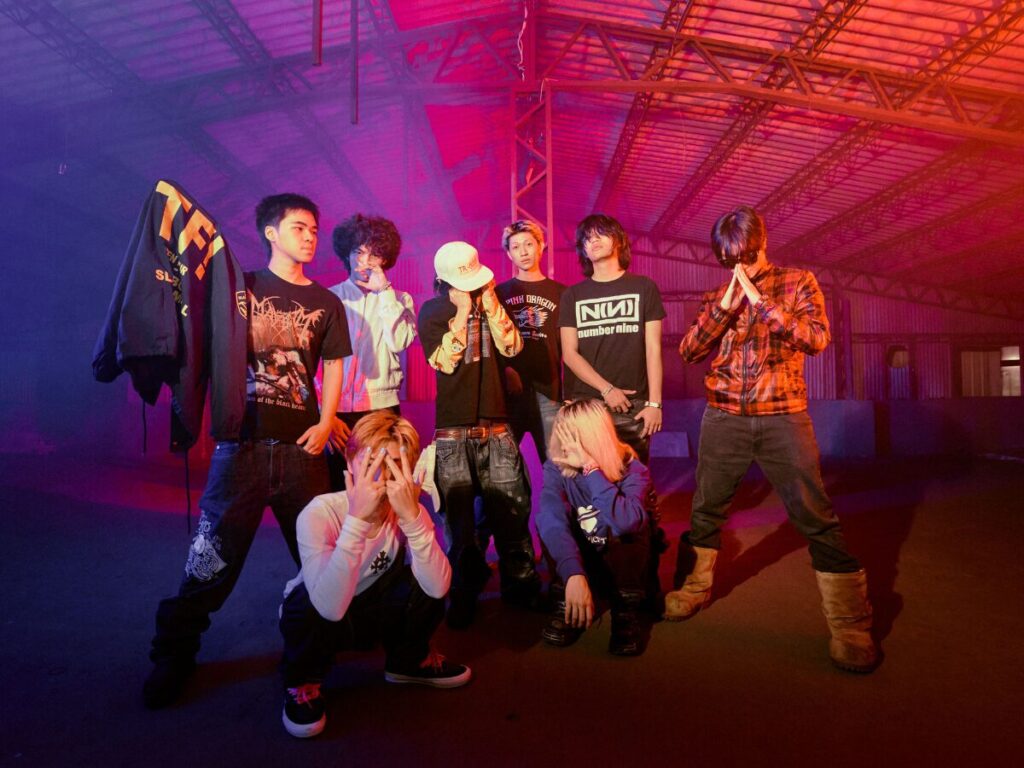
A Multinational Crossroads of Talent Centered in Taipei
What was the intention behind this lineup?
JJ:I intentionally made the lineup diverse to paint a full picture of Taipei’s underground hip-hop in 2026: it’s bursting with raw energy and incredible versatility. What makes this combination special is that two of the artists—Lobo Slashemall from Hong Kong and Sevenmind from Macau—aren’t local Taipei natives. (I’m originally from Hong Kong myself.) Yet, we all connected naturally through the underground scene here.
Taipei’s underground isn’t isolated; it’s a magnet that pulls in talent from across Asia. It creates a multi-faceted sound that mixes local grit with global influences. We’ve seen so many comments from overseas saying the flows and vibes remind them of CHE, osamason, slayr, etc. That’s exactly what we wanted to show. Taipei has a vibrant, hungry underground scene on the same wavelength as the world’s most cutting-edge sounds. This cypher is our manifesto, shouting to the world, “We’re here, and we’re coming strong.”
A Movie-Like Story Arc Born from Chance
The order of the rappers created a brilliant narrative arc. How did you decide on the structure?
JJ: Honestly, I initially used a website’s lottery draw to assign positions completely at random, just to keep things fair (laughs). But after seeing the lineup, I made a few small tweaks to give it a story line—almost like a movie with an introduction, rising action, a twist, and a strong finish.
- Introduction: I deliberately put PHIL COZY first. His smooth, melodic flow and mostly English bars make it a highly accessible entry point for international viewers. It’s a silky smoothness that immediately proves, “Taipei can hang with global sounds.”
- Rising Action: Then YUNG ANDYPISTOL and LOBO SLASHEMALL come in to crank the energy way up. Andy’s punchy, aggressive trap vibe combined with Lobo’s raw Hong Kong street edge creates an explosive build-up, exposing pure hunger.
- The Twist: Around the middle, BABYGRAPE is the big “twist.” His experimental, wavy approach on that unique beat flips the script completely. It brings an unpredictable, fresh air, making it feel like the cypher is evolving in real time.
- The Climax & Resolution: Finally, SEVENMIND, LIL RICK BABY, and BB bring variety and catharsis. Sevenmind adds cinematic depth and mood, Lil Rick Baby drops technical rage and insane wordplay to flex his skills, and BB closes it out with bouncy, charismatic swag.
Even though it started random, I believe we managed to express the dynamic, multi-layered nature of Taipei’s underground, where different energies collide yet harmonize into one massive wave.
Deadline Magic and Online Chemistry
The chemistry with the beats was outstanding. How long was the production period?
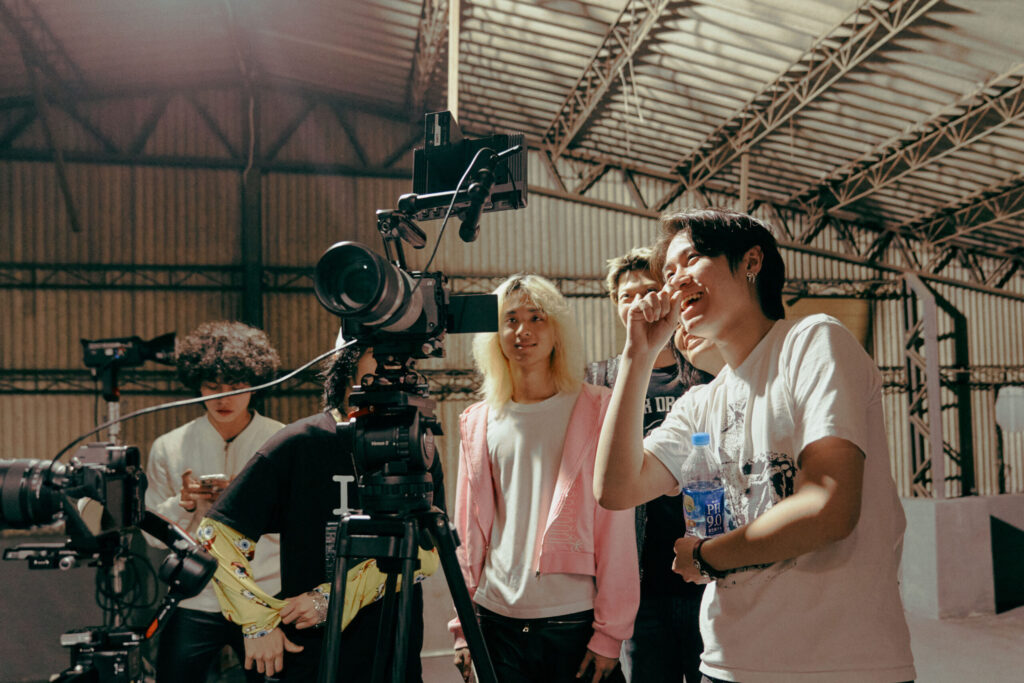
JJ: To be real, we had very little prep time—only about two weeks total—and absolutely no rehearsals. It was an entirely remote production where everyone just sent their verses online to the main producer @scvrlet.pi, and guest producers like 1jowisen (for Andy) and 2ukko (for Babygrape). That means the “chemistry” you see happened through file exchanges and last-minute tweaks.
The biggest surprise was YUNG ANDYPISTOL in the first half. He sent several versions early on, and while they were good, I felt “something was missing.” But on the actual deadline day, he dropped this insane version called “no1. Type of chigga.” The energy, the repetition of “Ima one type of chigga / #1 type of chigga,” the aggressive delivery… it was exactly the perfect piece needed to explode after Phil Cozy’s smooth opener. I was shaking, thinking, “Where did this come from?!” No fancy studio sessions, just pure hunger and last-second genius. That deadline magic is what makes the underground so special.
Shaping, Not Following: The “Sound of Taipei”
If you had to describe the current “Sound of Taipei Underground” in 2026, what would it be?
JJ: It’s a “hybrid” that refuses to fit into just one box. It fuses a deep respect for authentic boom-bap spirit and raw street grit with completely new, experimental rage, trap, and plugg influences.
It’s not just nostalgia or pure futurism—it’s messy, emotional, chaotic, and full of life. From scvrlet.pi’s dark, static-heavy beats to Babygrape’s psychedelic twists and Lil Rick Baby’s high-speed technical rage. Furthermore, switching between Mandarin and English internet slang mid-bar perfectly reflects Taipei’s fast-paced, multicultural streets.
As someone from Hong Kong, I’m still figuring out exactly what the “Taipei Flavor” is. But one thing I was determined to preserve and push forward in this cypher was using Chinese (Mandarin). Hip-hop often defaults to English for global reach, but I wanted to prove that Chinese can stand strong on its own internationally without losing its soul. We aren’t just following trends; we are mixing in our own unique flavors—neon shadows, late-night hustle, compressed emotions—and we are ready to collide with the cutting edge of the world.
Visually, the dark textures contrasting with Taipei’s public image left a strong impression.
JJ: Yes. We intentionally excluded all the bright, polished, tourist-friendly imagery like Taipei 101 or colorful night markets. That mainstream, superficial beauty often buries the real underground music of Taiwan.
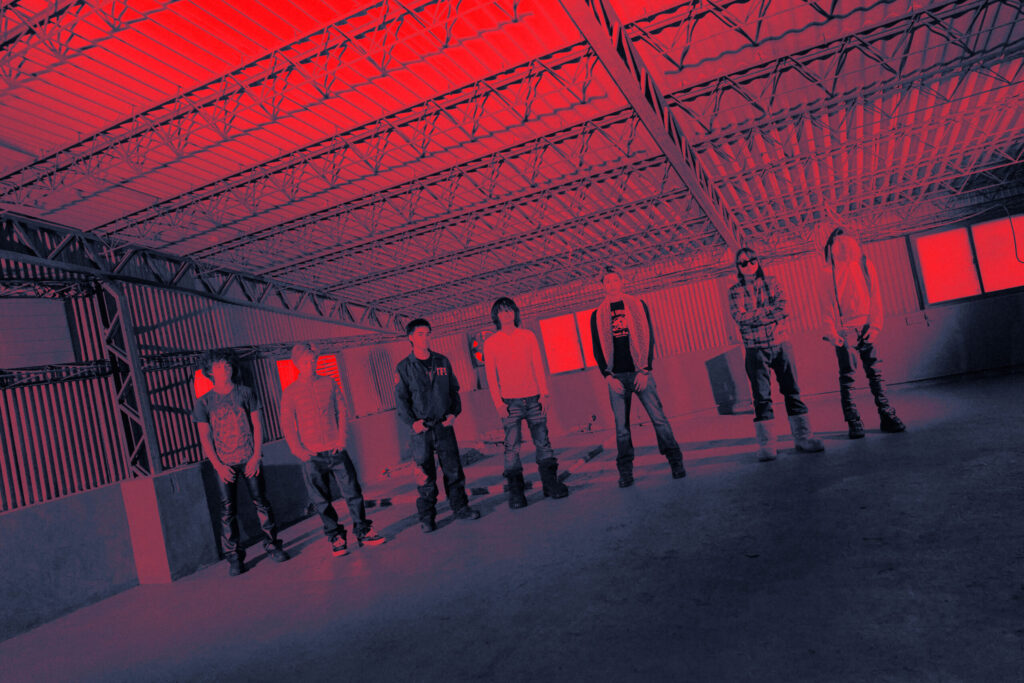
Instead, we rented an abandoned warehouse to emphasize the “shadows” and “grit.” This symbolizes their unstoppable energy, trying to break through while being buried under mainstream styles. The moody red lighting creates tension and intimacy, focusing entirely on the artists’ presence.
Also, in Part 2, we switched to red and blue lighting—intentionally echoing the colors of the Taiwan flag. Red for passion and hunger, blue for depth and resilience. The contrast between the dark shadows and the national colors bleeding in is a quiet assertion of identity: “Taipei’s underground isn’t just surviving; it’s putting down roots in this city and standing up to the world.”
Is there a common “invisible enemy” that these young rappers share?
JJ: Yes. It’s the reality of being “ignored and underestimated.” Mainstream Taiwanese media rarely covers real underground hip-hop, international scenes still view Asia as “followers,” and even locally, it gets overshadowed by pop. The rebellious feeling against being treated as “not serious enough” or “too small” is our greatest driving force, consciously or not.
We don’t have big budgets or major labels, but the pure hunger of “we can do this too” and “we’ll show you Taipei’s fire” drives us. We aren’t fighting a specific person or system; we are fighting “silence.” And right now, our voices are starting to get loud.
Looking Toward Japan: Breaking the Silence, Reaching the World
Finally, what are your future prospects?
JJ: Our most concrete goal right now is to perform live in Japan.
Surprisingly, about 50% of the viewers for this cypher currently come from Japan. The comments section is overflowing with enthusiastic reactions like “Taiwan is crazy” and “This is the hottest in Asia.” We don’t want to waste this energy. First, we want to bring this lineup, or at least some of the members, to Japan to make a showcase or live show a reality. If possible, we strongly hope to collaborate with Japanese artists as well.
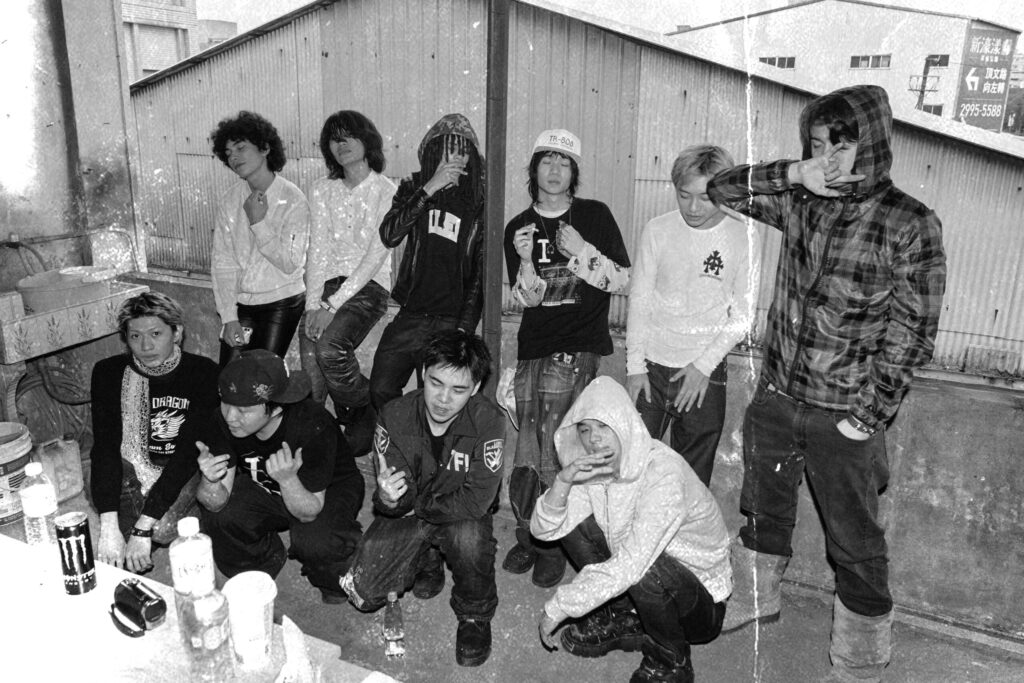
“We are fighting silence.” The director’s words are sure to pierce the hearts of all independent artists working across borders. Rather than relying on prepared stages, they are carving out their own spaces, overcoming even language barriers with their flow and passion. The day when the heatwave released from Taipei’s basement shakes livehouses in Japan may not be far off. WEEAVE will continue to follow their next moves.