
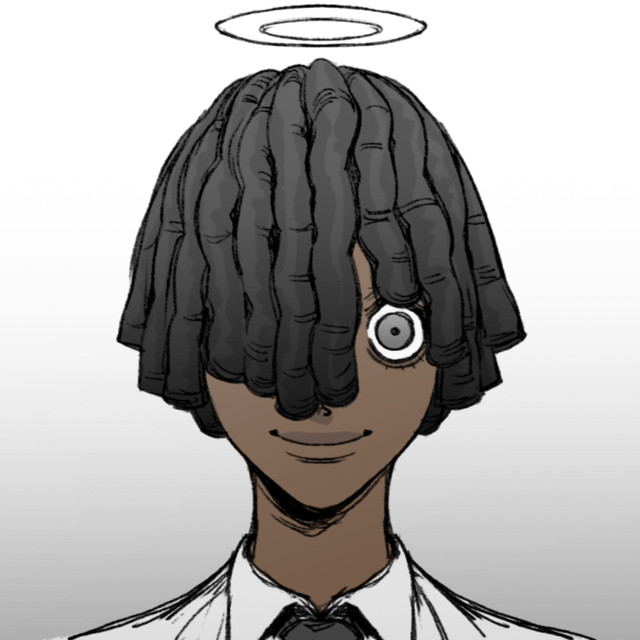
KENTENSHI introduced himself to listeners around the world through “paranoia,” a track built around a sample of Siinamota’s “Young Girl A.” Raised in North Carolina, his music brings together the hip-hop and R&B he heard from childhood with the sensibilities he discovered through YouTube: Vocaloid, J-rock, anime, and video games.
Created when he was fifteen, “paranoia” spread widely through short-form video platforms and became part of the wave that brought “Young Girl A” to a new generation of listeners around the world. KENTENSHI, however, is reluctant to frame that phenomenon as his own achievement. He believes Siinamota’s work possesses an enduring power that allows it to be rediscovered across generations.
After visiting Japan for the first time, experiencing its live-music culture, and performing his first-ever DJ set in front of an audience, KENTENSHI found his creative motivation renewed. WEEAVE spoke with him about his remix of Madobe Rika’s “bootleg wonderland,” the artists he hopes to collaborate with in Japan, the evolution of his production environment, and the influence of fashion, games, and visual culture on his work.
— First, could you tell us about growing up in the United States? What initially drew you so deeply into Japanese culture, including anime, games, and Vocaloid?
I think the environment I grew up in was pretty average for the area. I was an active kid and spent a lot of time playing outside with one of my childhood friends. I loved American football. I was never part of an official team, but I played it a lot.
At the same time, I was also a very curious kid. Between the ages of seven and ten, I started using the internet frequently. I watched all kinds of videos on YouTube every day, both before school and after I came home.
One thing I remember especially clearly is watching the music video for TeddyLoid’s “ME!ME!ME!” around 2014. I was definitely too young for it at the time (laughs). I also watched a lot of J-rock and math-rock videos.
Back then, there were YouTube channels that uploaded all twelve or thirteen episodes of an anime series. I watched shows such as The Devil Is a Part-Timer!, Ben-To, Charlotte, Rosario + Vampire, and Deadman Wonderland.
You could download YouTube onto the Xbox 360, so I watched most of them through my Xbox. For me, YouTube was a place where I could discover music, anime, and entirely new cultures.
— Your father is a beatmaker, and you grew up with instruments and equipment at home. What do you think was the most important musical instinct you absorbed from him during your childhood?
Through the hip-hop and rap my father made, as well as the R&B and hip-hop my parents played for me, I think I developed an instinctive understanding of rhythm and bounce.
It did not feel like I was being taught music theory. I absorbed it naturally as part of everyday life. That experience is still deeply embedded in the way I approach drums and groove today.
— You made “paranoia” at the age of fifteen by sampling Siinamota’s “Young Girl A.” Why did you choose that song at the time?
By that point, I was already very deeply into Vocaloid music. I came across “Young Girl A” while searching YouTube for songs that I might be able to sample.
I already knew the song, so as soon as I heard it, I thought, “I should try using this.” The part I especially wanted to sample was the chorus.
When I listen to Japanese music, the chorus often stays with me very clearly. The melodies and transitions are carefully written, and the chorus tends to stand out within the song. “Young Girl A” had that quality as well.
— As “paranoia” spread, “Young Girl A” was also rediscovered by younger listeners around the world. How do you feel about older work gaining a new context and reaching a contemporary global audience?
Honestly, I think “Young Girl A” had already made a major impact on internet culture and the Vocaloid scene.
That is why I feel uncomfortable receiving too much credit for supposedly making people rediscover “Young Girl A.”
I believe Siinamota’s work will continue to resurface as time passes. His music has the power to endure across generations. I think the renewed attention around “Young Girl A” came from the strength of the original work itself.
— Your tracks are characterized by intricate and unpredictable drum programming. Which artists have influenced your sense of rhythm?
It is very difficult to narrow it down to one person who influenced me the most. I listen to music in many different ways, and I also play a lot of rhythm games, so I am constantly exposed to a huge number of tracks.
Hakushi Hasegawa is one artist whose work I always follow. I am constantly curious about what they will do next. Their musicality and style are extremely interesting to me.
Among Vocaloid producers, nihosika has also been a major influence. I believe they use Kasane Teto through Synthesizer V or UTAU, and the energy, drums, and rhythms in their music are incredible. The mixes are also extremely detailed.
I would highly recommend their work to anyone who likes Vocaloid music. My favorite track is “LATENESS.”
— Have bands also influenced your work?
There are several bands I have listened to since my teenage years that helped shape my approach to arrangement and songwriting.
First, there is österreich. I think they have an extremely distinctive sound and approach to song structure. The first time I heard “Munou,” I cried. It is a truly beautiful song.
I also love Ai Kamano’s voice. I listen both to the songs she has performed with österreich and to her solo work.
Haisuinonasa is another amazing band. Their sound feels like a combination of experimental rock, electronic music, and minimalism, and I have been a fan for a long time. Ai Kamano was also a member, and I love the work of Yoshimasa Terui, one of the central figures in the band.
I especially think his soundtrack work for Jujutsu Kaisen is incredible.
— What do you pay particular attention to when building a beat?
Energy and bounce. Even when I repeat the same pattern, I use subtle changes in the sounds and rhythms to make the track feel as though it is constantly moving forward.
Because I grew up listening to Japanese rock and playing rhythm games, I am also drawn to having multiple developments and rhythms coexist within a single song.
— You are twenty-one now. How has your production environment changed since you first started making music?
It has changed a lot in terms of hardware.
Before I had my current setup, I made music on a genuinely low-spec laptop that I received for my birthday. I had never owned a computer of my own, so even having that made me extremely happy at the time.
A lot of the beats I made in middle school were produced on my mother’s work laptop. Eventually, I was able to start using a desktop computer that I built myself. That was a huge change for me.
— Have your DAW and software also changed?
I still use FL Studio. I like the recent versions, and I think the updates have been very good.
I also have more plugin options than I did before. Effects, modulators, granular plugins, and other tools allow me to express what I am thinking more clearly and in greater complexity.
I feel much more freedom in the production process now.
I have also built a collection of drums, sound effects, samples, and sound-design materials that suit me. The sounds are clearer, and each element is easier to use in an actual production.
Now I feel that I can shape almost anything that appears in my head. I also started playing guitar two or three years ago, so I have more tools available to me. I have a lot of tricks up my sleeve (laughs).
— What was your first impression when you heard Madobe Rika’s “bootleg wonderland”?

When I first heard it, I think I said, “Oh my God, this is insane!”
I was genuinely amazed by the instrumental. It has an intense energy, while the entire track remains firmly controlled. It contains so many different sounds and sections, and it is extremely technical.
I also thought TORIENA’s vocal performance was incredibly cool.
— What concept did you have in mind for the remix?
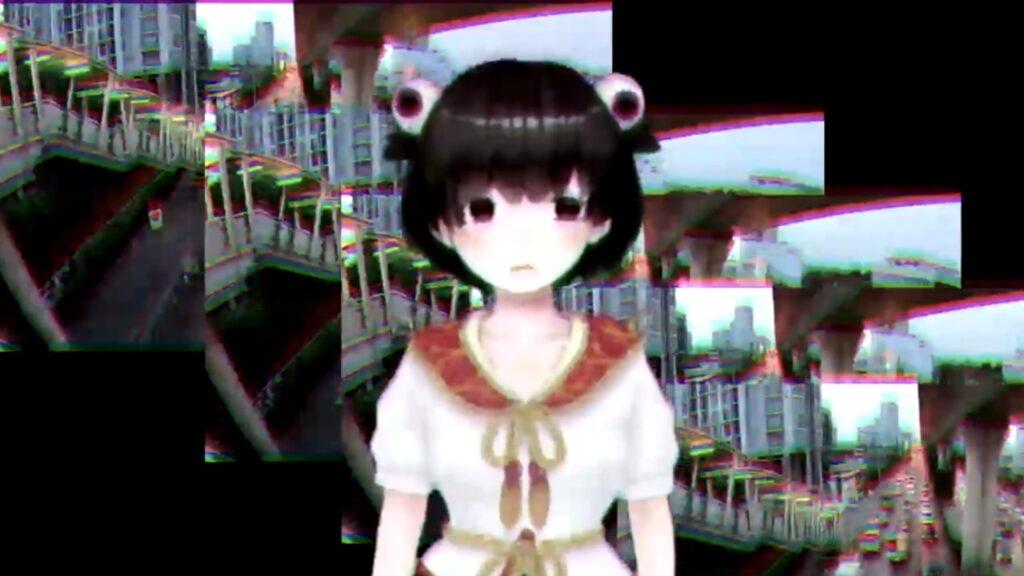
While making the remix, I was thinking a lot about video-game soundtracks.
At the time, I was listening to racing-game soundtracks such as Sonic Racing: CrossWorlds and Mario Kart 8.
I like the way game composers extract distinctive elements from multiple genres and transform them into energy for a game or racing course.
For example, they might combine math rock and jungle with hard-techno elements. I find the idea of mixing different genres toward a single purpose extremely interesting.
I wanted to use every technique I had to make a fun and intense track that could match the energy of the original.
— When reinterpreting a song by a Japanese artist, how do you balance your own style with respect for the original?
My style itself has been influenced by many Japanese artists, producers, and bands, so I do not really think of those two things separately.
I have a great deal of love and respect for every artist and song I remix or reinterpret.
I now feel that my production skills have improved. That makes it even more important to put the maximum amount of effort into the track and use everything I can do. That is how I show respect for the original.
— Your activities in Japan are expanding through your work with U/M/A/A. What would you like to pursue there in the future?
I would love to attend more music events in Japan, and I would also like to perform at them if possible.
Visiting Japan for the first time was a major experience for me. If I tried to explain everything in an interview, it would become incredibly long (laughs).
To put it briefly, it was one of the most beautiful experiences of my life.
I encountered so much love and live music, and I also performed as a DJ in front of an audience for the first time. It felt as though a new fire for music had been lit inside me.
I feel more inspired now, and my desire to make great songs with great artists has grown even stronger.
In the future, I would like to work on soundtracks for games, anime, and other animated projects.
— Which Japanese artists are you currently interested in, and who would you like to collaborate with in the future?
A few people come to mind.
First, I would love to work with Ai Kamano in any form. I feel a deep connection to her work. I am also interested in how she creates and what influences her.
I would also like to work with nihosika. They are one of my favorite active Vocaloid producers, and their work is genuinely incredible.
They are not Japanese, but I also love ippo.tsk’s work and would like to collaborate with them someday.
I would like to work with Sasuke Haraguchi as well. His songwriting is extremely catchy, and I feel that we could make a really fun song together. His production is incredible, and his mixes are very clear. I would love to learn a lot from all of them.
ueii is another very cool Vocaloid producer.
Among Japanese underground rappers, I like yve and yvnlazy. I would love to make beats for them.
— Looking even further ahead, are there any artists you dream of working with?
AiNA THE END. She is incredibly cool, and I love her style.
The same goes for Kenshi Yonezu. Both of them have distinctive lyrics, voices, and styles of expression.
I would also love to work with Cö shu Nie. They are one of the most iconic bands to me. Their sound is unique and incredibly expansive.
There are many others as well. I almost want to name every single one of them.
— WEEAVE explores the intersection of music, fashion, and youth culture. What kinds of culture outside music inspire you?
At this point, I draw influence and creative motivation from almost every form of artistic expression and culture.
I spend a lot of time in front of a computer, so I am always watching something or playing games.
In gaming, rhythm games such as SOUND VOLTEX continue to inspire me. They make me want to try new things with my own sound, and they also change the way I approach music.
I even have a SOUND VOLTEX controller at home. When I cannot go to an arcade, I play it there.
— What about fashion?
By digging deeply through the internet, I find new ideas for outfits and learn more about the design languages I am drawn to.
Karasu-zoku, or the “Crow Tribe,” is one Japanese fashion subculture that has had a major influence on both my life and the way I dress for a long time. It remains important when I think about the kind of clothes I want to wear.
— Are you also influenced by film and visual art?
I am always drawn to films with cool camerawork and stories that are interesting or complex.
I follow many painters and digital artists on Instagram, and they are constantly posting amazing work.
The work itself often inspires me, and seeing people continue pursuing a single form of expression and putting sustained effort into it is also extremely encouraging.
— Finally, what does “cool” mean to you in the context of creative expression?
I think people who express themselves in their rawest form, without apologizing for who they are, are cool.
People who are not afraid to express themselves—and people who still express themselves even when they do feel afraid.
I am still learning about self-expression in my own everyday life.
Even so, I believe everyone can gradually become more comfortable with being themselves.